
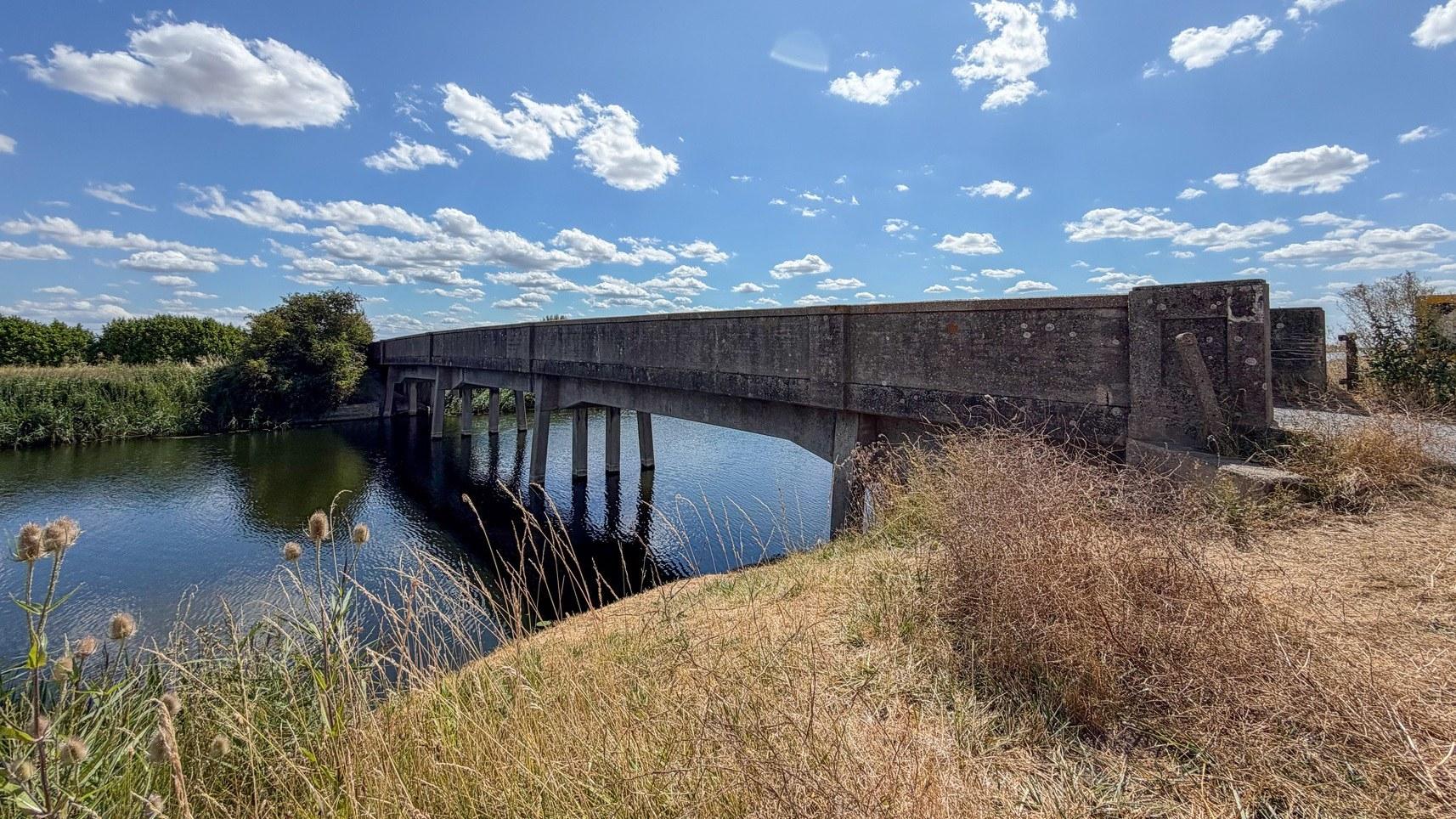
Four SM:ART monitoring units at the half-joints of a 1940 reinforced concrete road bridge in the Norfolk fens, in a SM:ART Trial with Norfolk County Council.
- Asset owner
- Norfolk County Council
- Structure
- Reinforced concrete beam-and-slab road bridge of five spans, about 41 m, built 1940
- Location
- Middle Level Main Drain, Marshland Fen, Norfolk
- Installed
- October 2026
- Instrumentation
- Four SM:ART units, one at each half-joint outer face
- Measured
- Half-cell potential, concrete resistivity, temperature, relative humidity, tilt
- Cadence
- Hourly
The problem
Half-joints concentrate risk. The nib is a thin section carrying the deck reaction, it sits directly beneath a deck joint, and water carrying de-icing salts drains towards it. The reinforcement inside is hard to inspect and harder to assess without intrusive investigation.
At Rungay’s Bridge two half-joints in the centre span carry a suspended span. The joints are filled, so the bearing shelves inside them cannot be seen at an inspection.
Principal inspections run on a six-year cycle. Between them, the condition of the reinforcement in a half-joint changes continuously and unobserved. For an asset owner weighing repair, strengthening or replacement, that interval is where the uncertainty sits.
The SM:ART Trial at Rungay’s Bridge is set up to narrow that interval: hourly measurements taken at the half-joints themselves, as evidence for Norfolk County Council alongside its inspection and assessment work.
The asset
Rungay’s Bridge carries a minor road over the Middle Level Main Drain at Marshland Fen, Norfolk. It is a reinforced concrete bridge of five spans, about 41 m long, built in 1940, with two beams and a deck slab cast in place. Norfolk County Council owns the structure.
The centre span has two half-joints, which carry a suspended span.
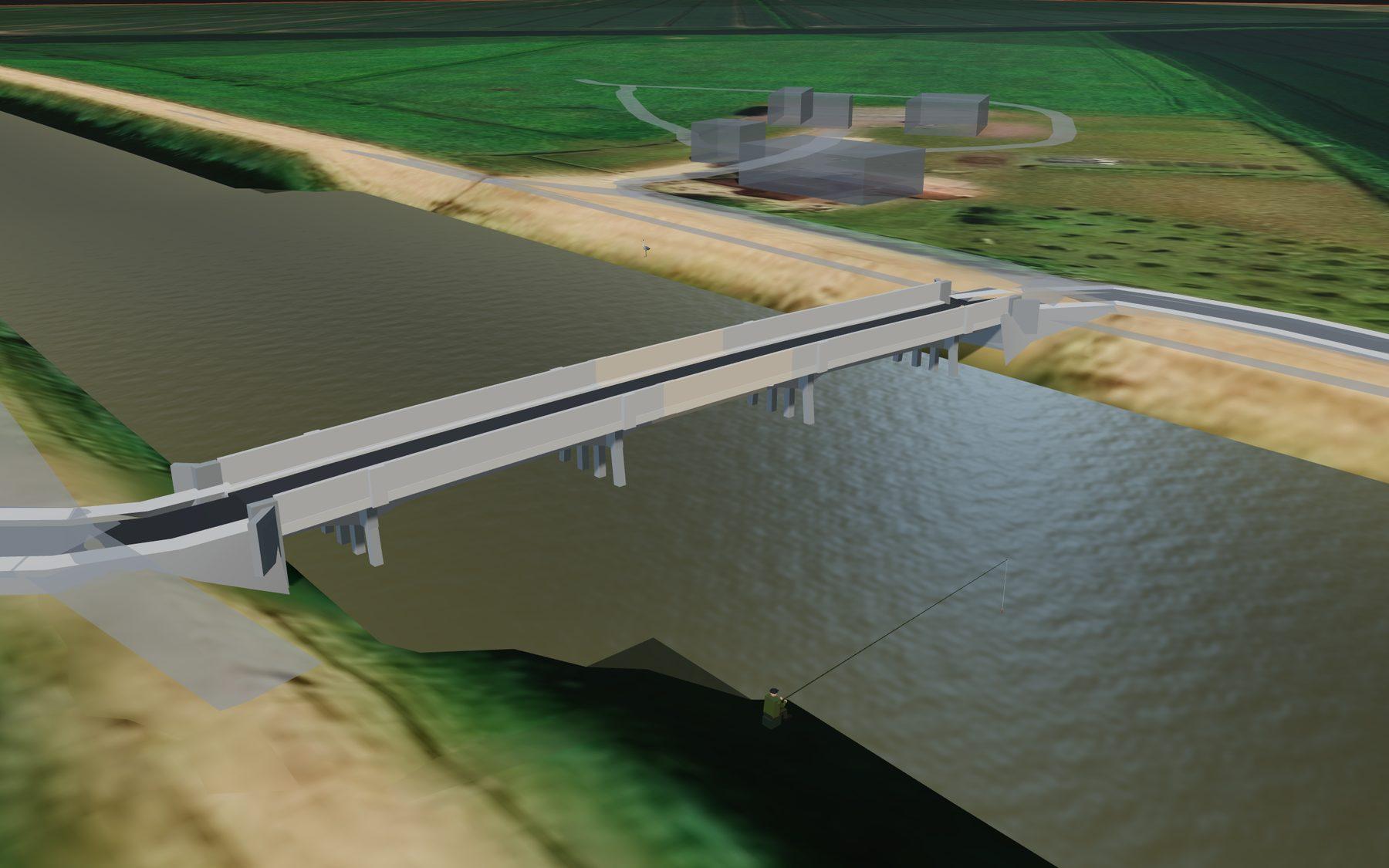
Before the installation, AI read Norfolk County Council’s records for the bridge: inspections, assessments, surveys and the record drawings of 1939 and 1940. The drawings were rebuilt as a 3D record model of the bridge as drawn, down to the reinforcement.
The SM:ART deployment
Four SM:ART monitoring units were installed, one on the outer face of each beam at each half-joint. The work ran from 27th to 29th October 2026 and covered nearby Morton’s Bridge in the same visit. Structivate’s team worked from a floating pontoon on the drain, with a scaffold tower up to the half-joints.
The positions were chosen from the evidence in the council’s records and set out on the 3D record model before the installation. On site, a reinforcement scan fixed each hole before drilling.
Each unit is retrofitted through drilled holes and grouted in place, with its own connection to the reinforcement. The units are self-contained and battery powered, with batteries sized to the six-yearly principal inspection cycle, and they report over a wireless uplink to the cloud platform. Measurements are taken hourly.
The units measure half-cell (corrosion) potential, concrete resistivity, temperature and relative humidity. Tilt is recorded as a separate structural-behaviour signal.
SM:ART was developed at TU Dublin with Enterprise Ireland Commercialisation Fund support. Structivate runs the SM:ART Trials and produces the analysis and reporting for the asset owner.
Findings to date
Monitoring is underway at Rungay’s Bridge.
No readings, trends or conclusions are published here. This page describes the deployment, not its results. What the measurements mean for the structure is for Norfolk County Council to decide; anything published later will follow the council’s review and be stated as measured or modelled accordingly.
Engineering implications
The deployment does not replace the inspection regime. General and principal inspections continue; the monitoring fills the interval between them with hourly evidence from the details of concern.
The decision remains an engineering one. SM:ART provides measured evidence; Norfolk County Council weighs it alongside inspection findings, assessments and its own judgement.
What the Rungay’s Bridge deployment shows so far is the preparation as much as the installation. Before anyone drilled, the owner’s records had been read, the record drawings rebuilt as a 3D record model and the positions chosen from the evidence in the records. That way of working is what The SM:ART Trial offers other owners of ageing reinforced-concrete structures.
From the installation
Structivate’s own photography from the October 2026 installation at Rungay’s Bridge.
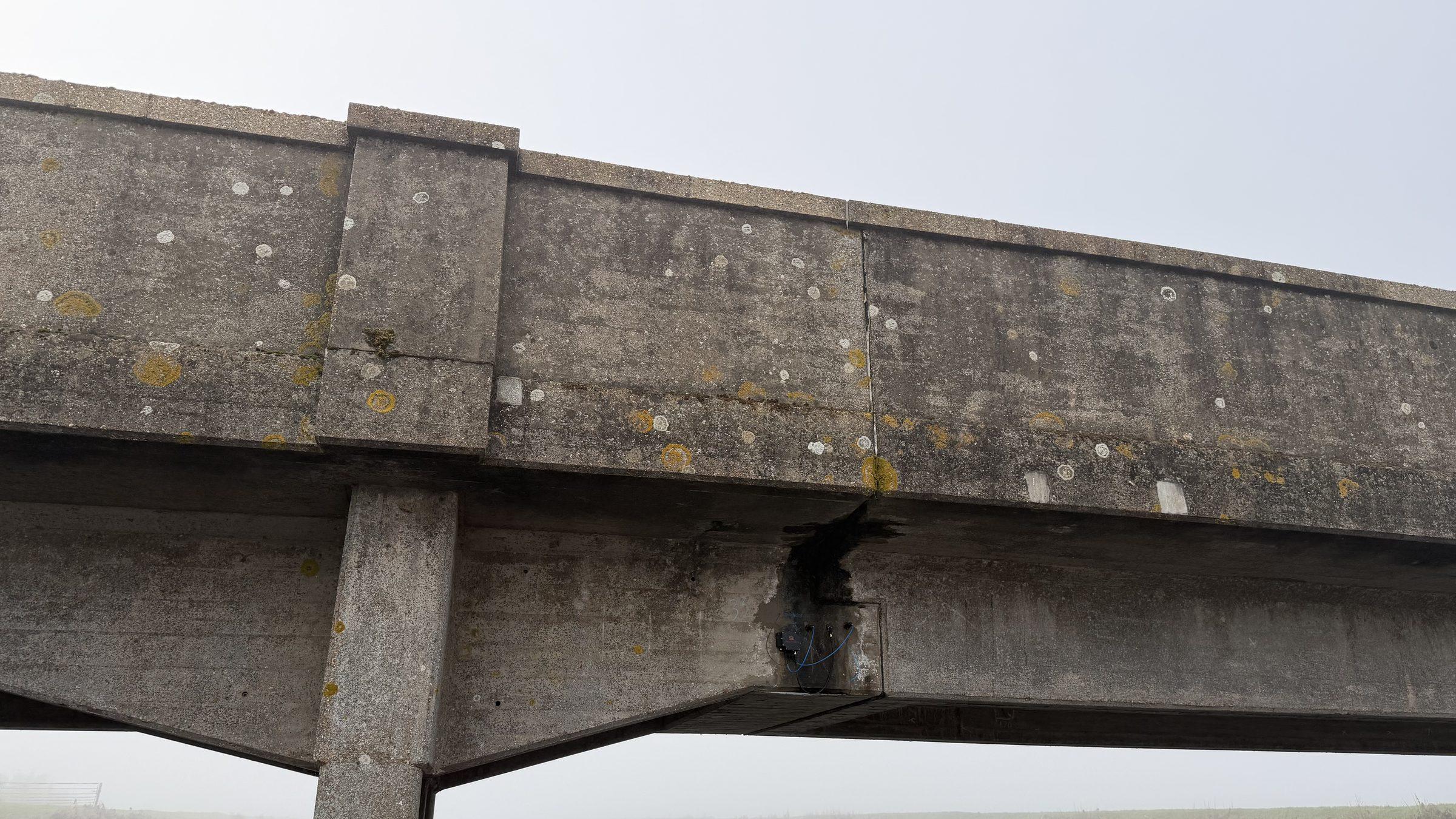
The edge beam and solid parapet above a pier, in morning fog. 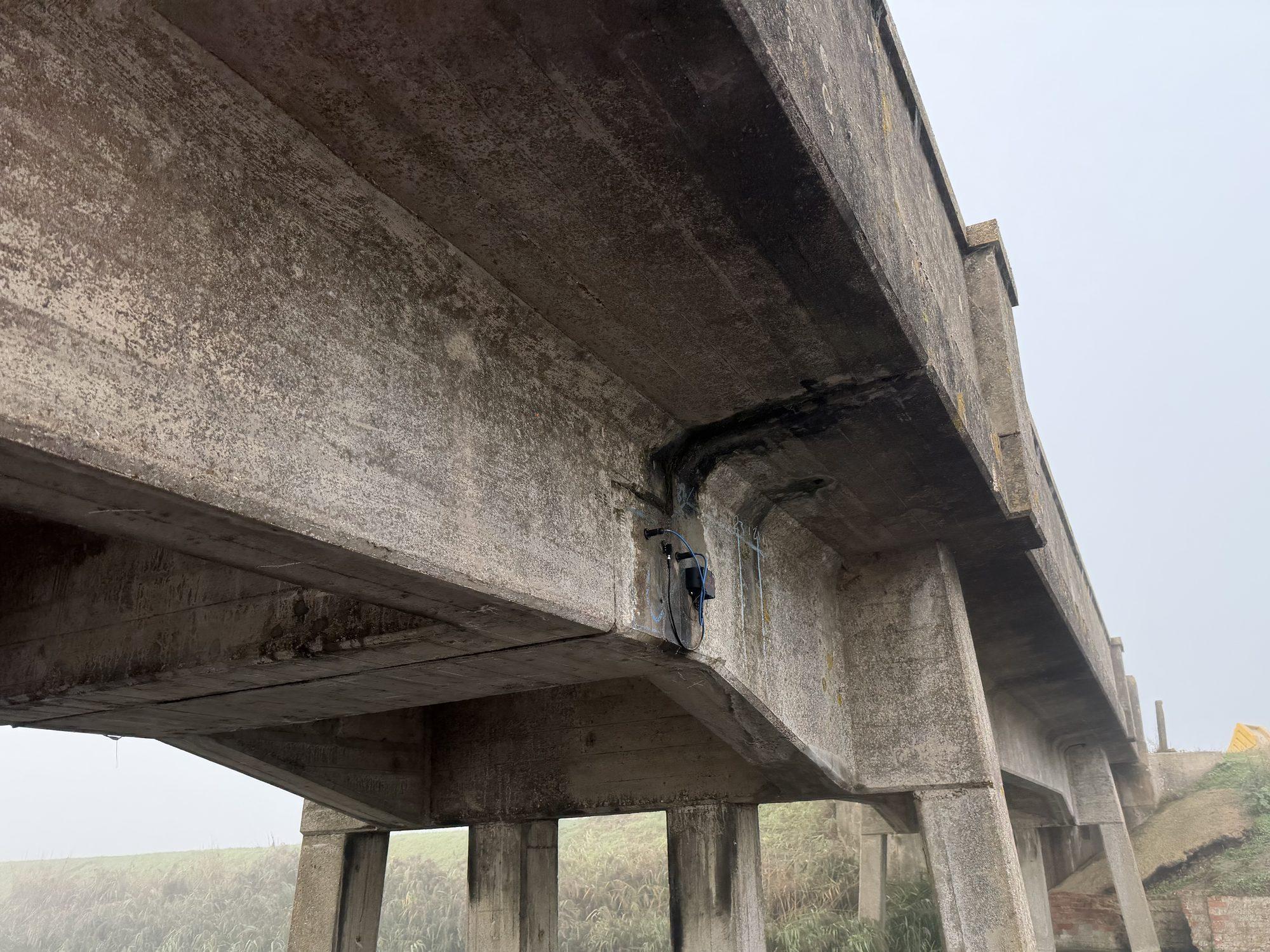
A unit at one of the half-joints, seen along the beam. 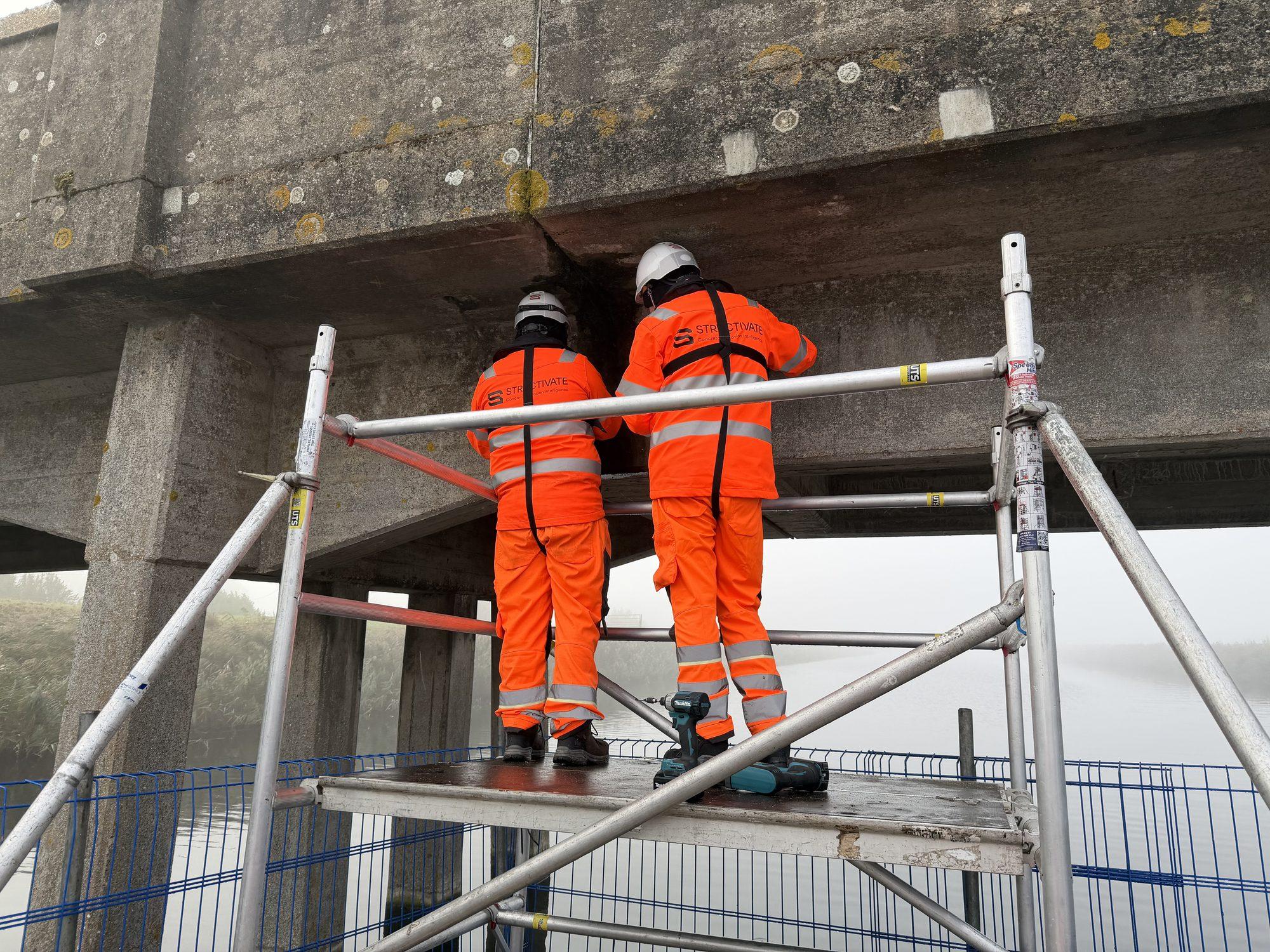
Working at a half-joint from the scaffold tower. 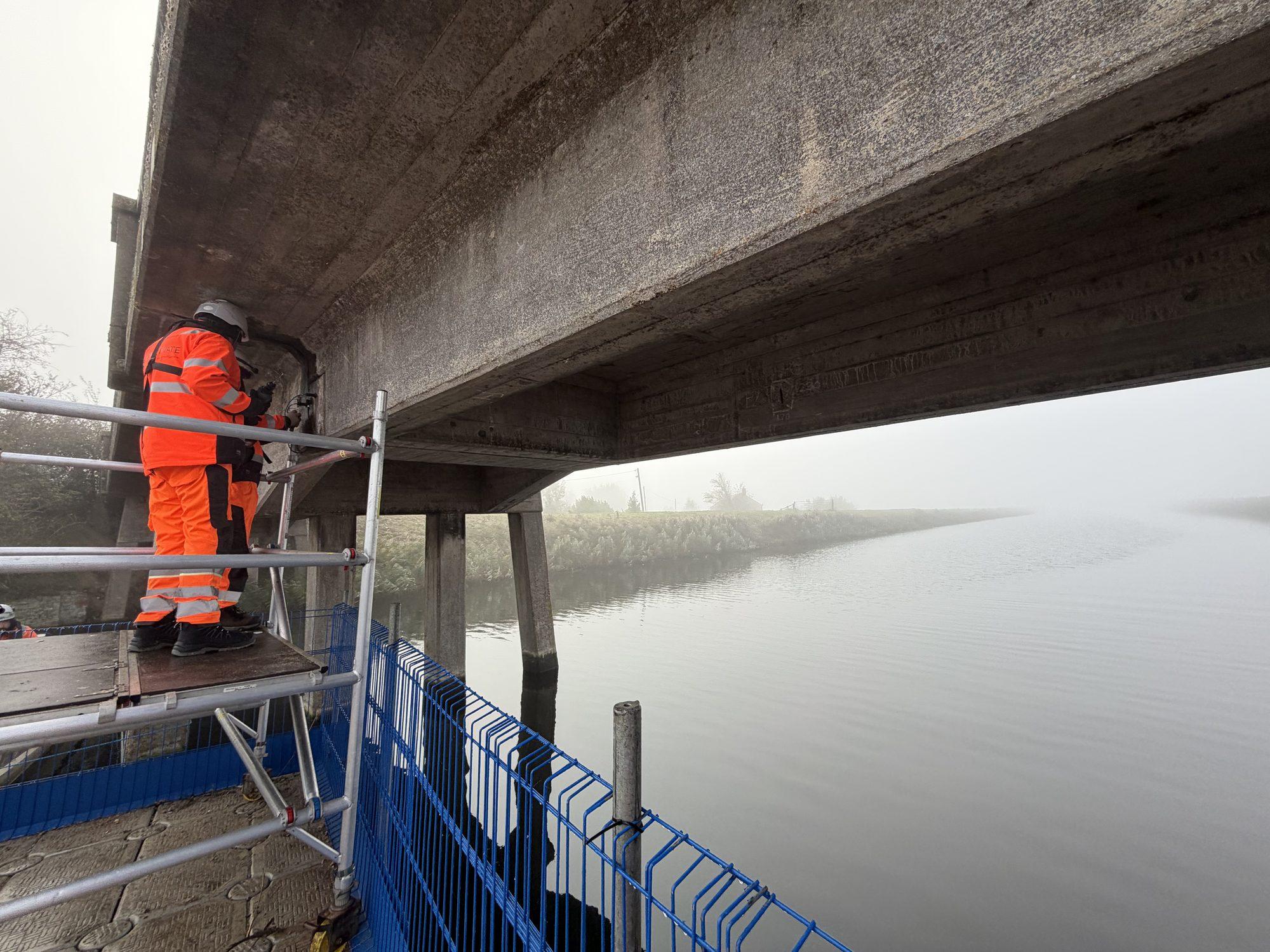
The scaffold tower on the access pontoon, in morning fog. 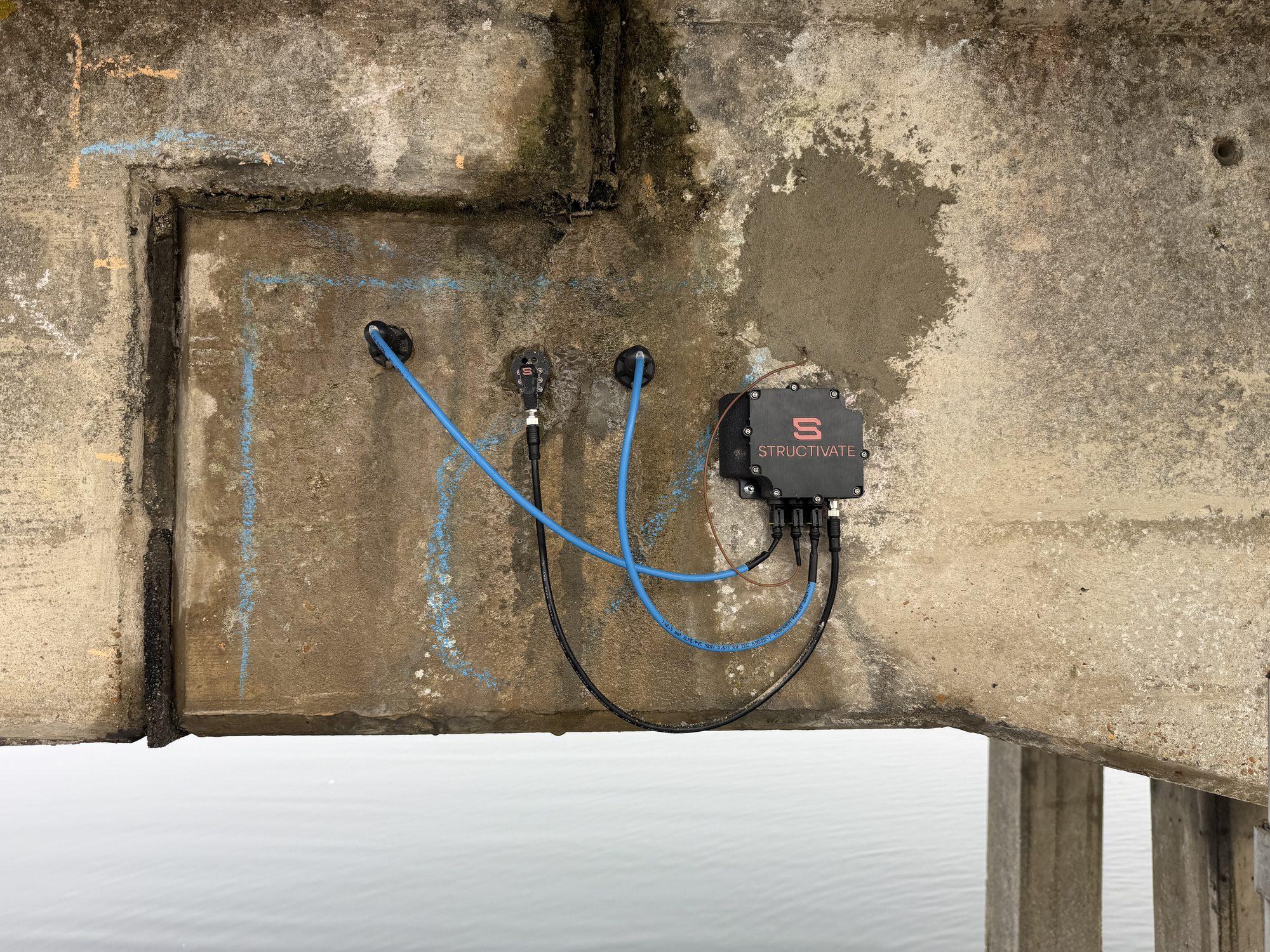
A unit beside the step of a half-joint, with its sensors in the concrete. 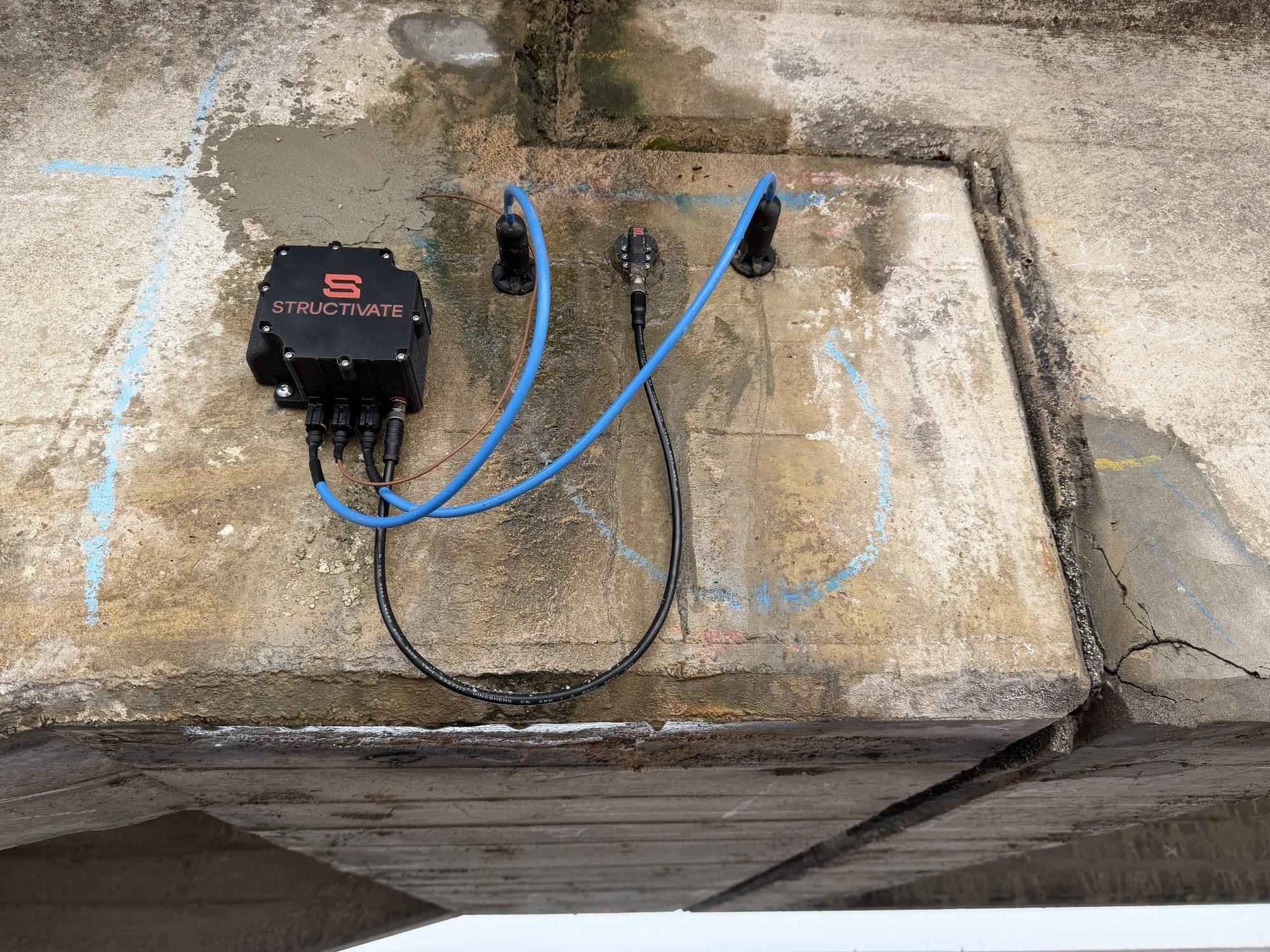
A unit in position, with its sensors grouted into the concrete. 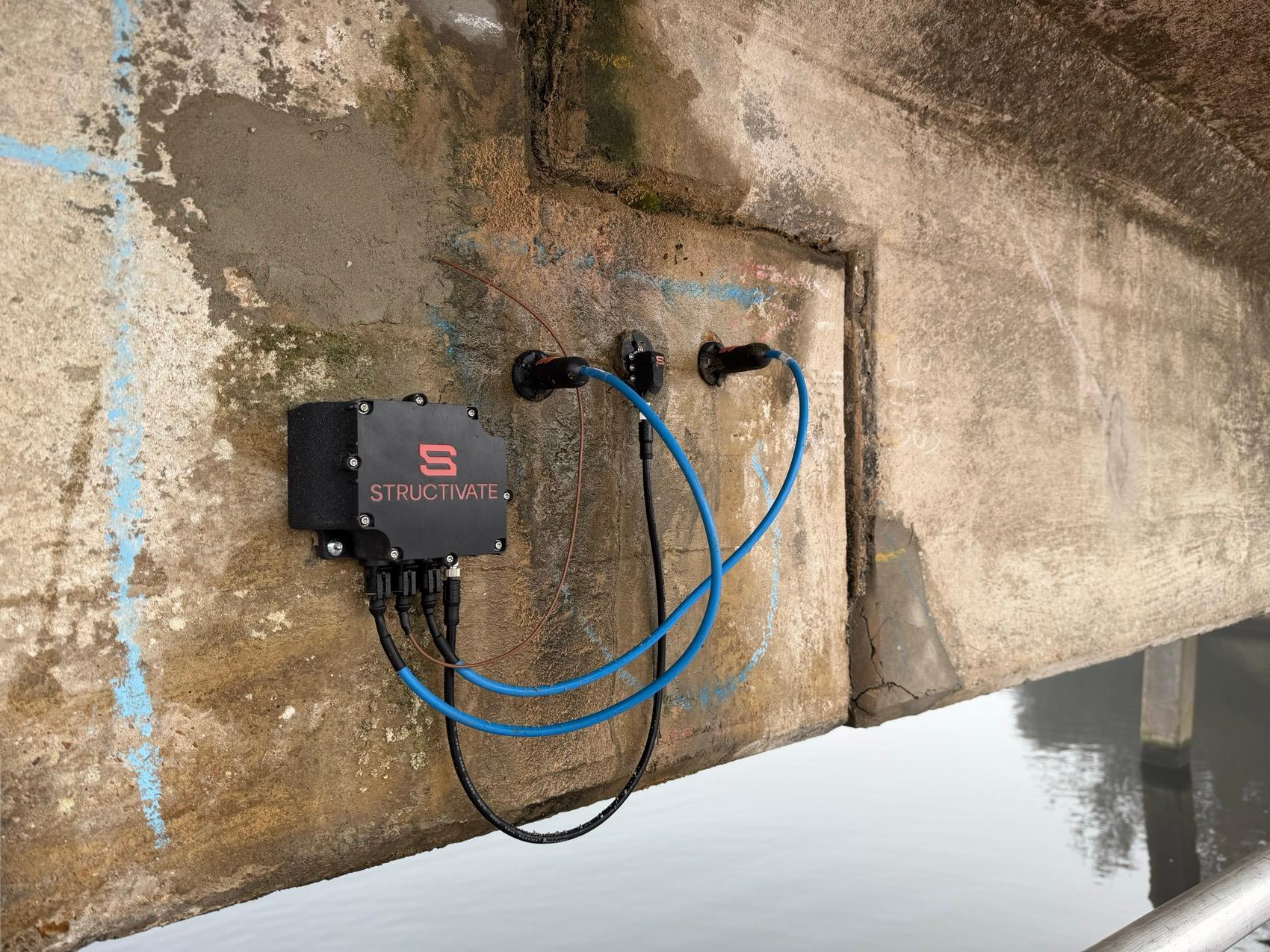
A unit with its sensors cabled into the concrete.
What happens next
Monitoring continues. Findings published here will follow Norfolk County Council’s review.
View case studies
Have a similar structure?
Applications are open for the Spring 2027 SM:ART Trial. Half-joint bridges like Rungay’s are one fit. The next cohort is expected to consider a wider range of reinforced-concrete structures.